
The ultimate film festival. A gathering of the auteurs down in beautiful Southern France.
How the hell did I get here?
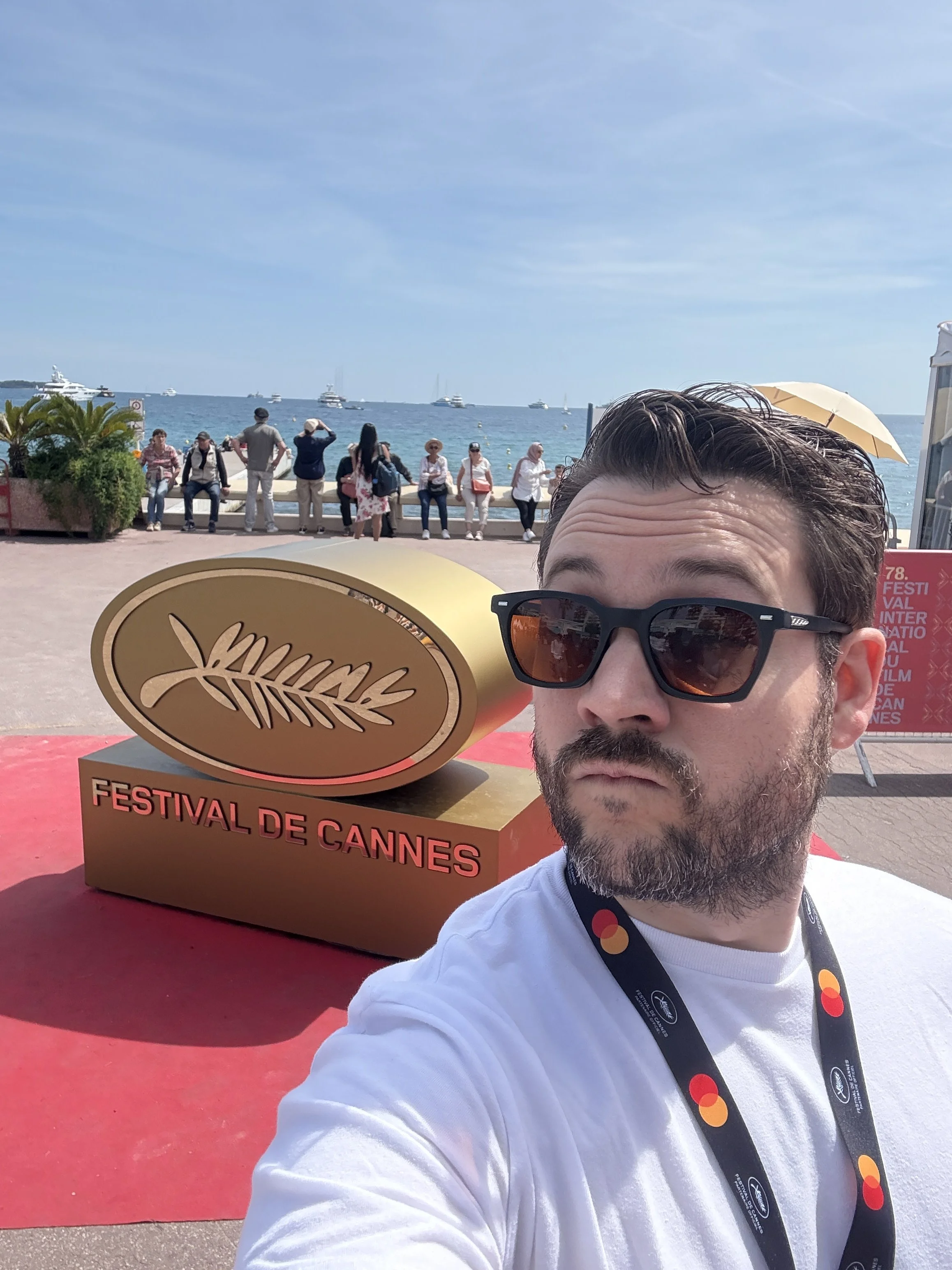
I asked myself this question every couple hours for the first two days navigating the transit systems from the plane to the train to the bus to the uber, until I was nestled inside an unfamiliar apartment and combatting jet leg enough to finally think to myself… maybe I do belong here. Which is an entirely different, but exceptionally valuable, lesson - you belong anywhere you are. Simple physics turned philosophy. Don’t combat the empirical. If you’re standing in the middle of the Vatican on the day they select the new Pope, then maybe you’re not the new pope, but you certainly belong there, because you are there. So there I was, in the South of France attending the world’s most prestigious film festival and thinking, I just might belong here.
Enough of that, let’s get specific and talk mistakes and preparation, because despite my confidence in belonging, I could have planned this trip much better.
1. Accreditation
When you attend the Cannes Film Festival, you don’t just show up and buy a ticket. You either qualify through your profession, apply in advance, or spend a serious amount of money. Sometimes you do all three. What I didn’t realize before arriving is that the accreditation process is typically done online through the Festival website or the Marché du Film website and it’s typically done weeks or months ahead of time. Most people get this part done long before they ever step foot in France. I, however, thought it was best to test the showbiz gods and just figure it out while I was boots on the ground. And somehow it worked.
There are on-site accreditation offices for this exact scenario, but it is not the standard procedure. I got lucky. I waited in line, approached the counter, and essentially made my case. You tell them your name and you hope you have enough credits on IMDB to show for it, because that’s the extent of what they do. They look you up online and they ask, “Are you here as an actor? A Producer? A journalist?” I told them I was there as a Director but my resume did not reflect as much and so they put me down as an actor. No worries, I have plenty of acting credits. I’m still an actor in my heart somewhere. And the important part is… I’m inside! After a fee, of course. A fee that would’ve been much smaller had I registered my accreditation before arriving. So let that be your first lesson.
One more thing, not all badges are created equal. There’s a hierarchy, and that hierarchy determines what you can access, where you can sit, and how easily you get into the theaters. I wasn’t thinking about that at the time, but I should have been because I could’ve easily said the wrong thing and screwed myself out of priority lines. Apply early, know your category, and understand that your badge dictates your entire experience.
2. Marché du Film
The Marché du Film is the business engine of Cannes. It’s essentially a massive film market operating alongside the festival. It’s designed to buy, sell, finance, and package your films; and it helps to keep Cannes unique in the film festival world (there are really only a few select festivals where a screening will get you a sale on your film. Cannes is one of them).
Physically, it’s spread across multiple areas, primarily inside the Palais des Festivals et des Congrès (especially in the lower levels), the Riviera building next door, and a series of beachside pavilions that line the Croisette.
You may think you’ve seen the extent of it, but trust me there’s always more. You’ll find sales agents, distributors, financiers, and production companies set up every few feet. Some you’ll recognize immediately, and others you’ll have never heard of but probably should know about - especially if your film hits a niche audience like vampires who surf. Everyone is there to do business.
It is best to have meetings scheduled in advance because, first of all, it sounds cool… “I have some meetings lined up in Cannes,” “We took a few meetings in Cannes” “I’m actually not including any creatine in my protein shakes lately, but I’ll tell you more about that after my meetings in Cannes,” (believe me, I used this phrase often). And second of all, it is the only way you can be sure these meetings actually happen. But if you can’t schedule in advance, it’s okay, the environment there is intentionally designed for easy access. You can walk up, introduce yourself, and start a conversation on the spot with anyone. That said, don’t go in blind. Spend some time walking the floor. See who’s there, where they’re located, how busy they are, and how they are engaging with people before jumping into a pitch.
Timing matters. The Marché doesn’t run for the entire festival, it is concentrated in the first week. That’s when the real business gets done. If you wait too long, you’ll miss the window.
3. Pavilions / Film Commissions
Some more important business is done at the international pavilions and film commission spaces, often referred to as the Village International. These are lined up along the shore - very easy to spot. This is where countries and regions promote themselves as production hubs for filmmakers.
The whole point here is to encourage international development. France, among other countries, wants you to film in their region because you bring in outside money. And so they offer you a tax credit to make it all that much more attractive. You can meet with the Philippines film council or the Romanian film Council or the Japanese film council and they’ll all say roughly the same thing - please film in our area, use our local teams, bring money into our local markets, and we’ll offer you a rebate up to a certain percentage to make it all worth it. The CNC offers a 30% tax rebate if you film inside France. Which is why we made our visit to the CNC office a priority as we plan to film our next feature there. Of course, there are more rules and regulations you can learn about once you’re inside, but it gets too detailed for this blog - I’ll write another one in the future.
This area is less about immediate deals and more about strategy - where to shoot, how to finance, and how to structure your production internationally.
4. Theaters
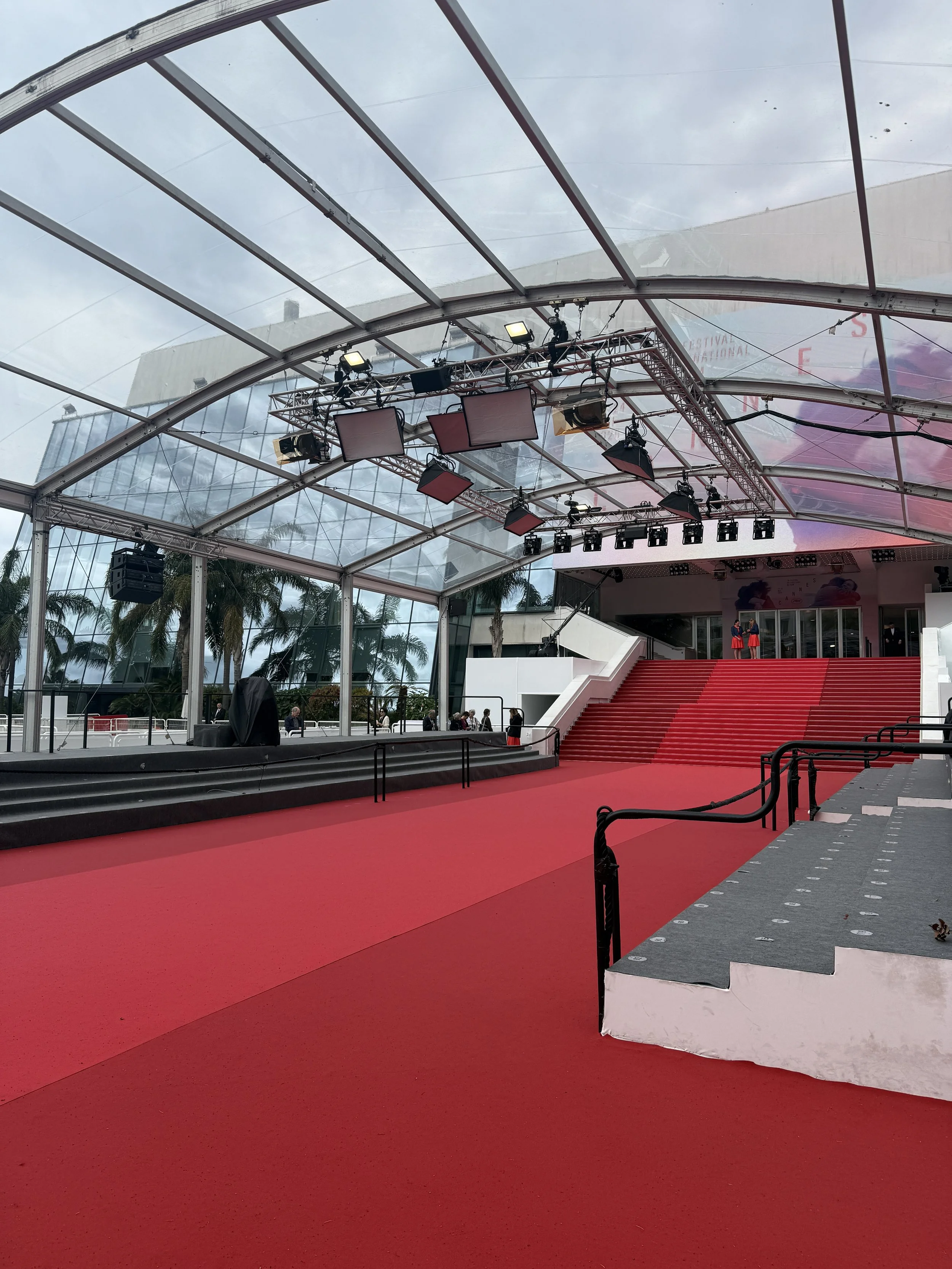
The theaters are where it all happens. And boy there are a lot of them. The central hub is the Palais des Festivals et des Congrès, the main building right on the Croisette. This is where you’ll find multiple screening rooms stacked across different levels, each with its own purpose, prestige, and vibe.
The most important is the Grand Théâtre Lumière, this is where the major premieres happen, the red carpet events, the tuxedos, the full spectacle. Then you have theaters like Debussy, Bazin, and Buñuel, each hosting different selections and screenings throughout the festival.
This is where you’ll see the spectators, the photographers, the filmmakers, the actors. The fans all begging to be plus ones (literally people show up in tuxedos and evening gowns without tickets). Everything converges here.
Going to a screening isn’t just about showing up on time. Yes, you line up early, sometimes an hour early, sometimes more, but access is structured. Your badge level matters. Your reservation matters. There are different lines and different priorities, and those determine how and when you get in, and sometimes where you sit.
There are also additional theaters outside the Palais. Places like Cinéma Les Arcades, Olympia Cinema Cannes, and newer venues like Cineum Cannes handle the overflow and additional screenings. Compared to the Palais, they feel more like traditional cinemas, but they’re still part of the festival ecosystem. If you’re from New York, you’ll find them all to be within a reasonable walking distance. For anyone else however… they could be a short cab ride away.
5. Attendance / Ticketing
Almost everything is done online through Cannes’ official ticketing system, which is directly tied to your accreditation. Once you’re accredited, make sure to log in and create your account immediately. From there, you’ll have access to all available screenings.
You’ll be making reservations immediately, and they open up in waves - often early in the morning, so you have to move fast. Screenings fill up quickly, so don’t be too precious about it. Lock in a few films, then build your day around them.
A warning: you must attend your selected film! You must use your reservation! If you decide you can’t make it, then you have to cancel within an hour’s notice or you’ll get dinged. It’s all part of their no-show penalty system. Too many dings, and that’s it! No more movies for you!
And if you decide you want to switch to another film at the same time, the system won’t allow for that either. You must cancel your original reservation first. This system really forces you to commit, which honestly… I have so much respect for. Guaranteed there would be empty theaters with long lines outside if they didn’t penalize you.
A good tip - keep refreshing your browser throughout the day. Reservations are always opening up. There were specific films I thought were completely out of reach for me that suddenly became available just a couple hours before screening. So don’t count anything out.
6. Nightlife
A lot of the major parties are invite-only, and believe me, we tried. Networking with sober strangers only gets you so far.
The center of that world, however, revolves around a few key hotels - places like Hôtel Barrière Le Majestic, Hôtel Martinez , and Hôtel Carlton. That’s where you’ll find the highest concentration of celebrities, private events, and industry gatherings. But if you don’t have access to that world, there’s plenty of life around it!
Behind the Majestic, down a few side streets, and around a corner, you’ll find smaller bars with crowded pockets of people drinking in the streets. One specific spot, Le Petit Majestic, is busy every single night with sandals and tuxedos alike. That’s where all the conversations happen - what you’ve seen, what you liked, where you ate today, when you got lost, which celebrity you ran into, your disdain for generative ai, where you are in your respective careers, all of it.
I’d also recommend going out to dinner every night and being as social as possible. Talk to people as much as you can. Film festivals are all about the networking, and a random conversation at dinner can be just as valuable as any official meetings on the calendar.
We met the producer of a film that premiered that week simply because we were sat next to each other at a restaurant. And also because we were both American and I could tell they were from LA which made for some good self-deprecating humor at the time.
7. Dress Code
When to dress up… whenever you want? But also… not really?
It is the South of France so everyone is a little more posh than you’d typically expect in say… Bushwick or Detroit (no offense to them). So try not to wear a t-shirt and shorts unless that shirt is like a Supreme brand, but even then…
I know we’re mostly all creatives here and we can usually get away with this type of thing (I haven’t ironed a shirt for work in over 12 years), but try to avoid looking like you just rolled out of bed. That said, there are actual rules depending on where you’re going.
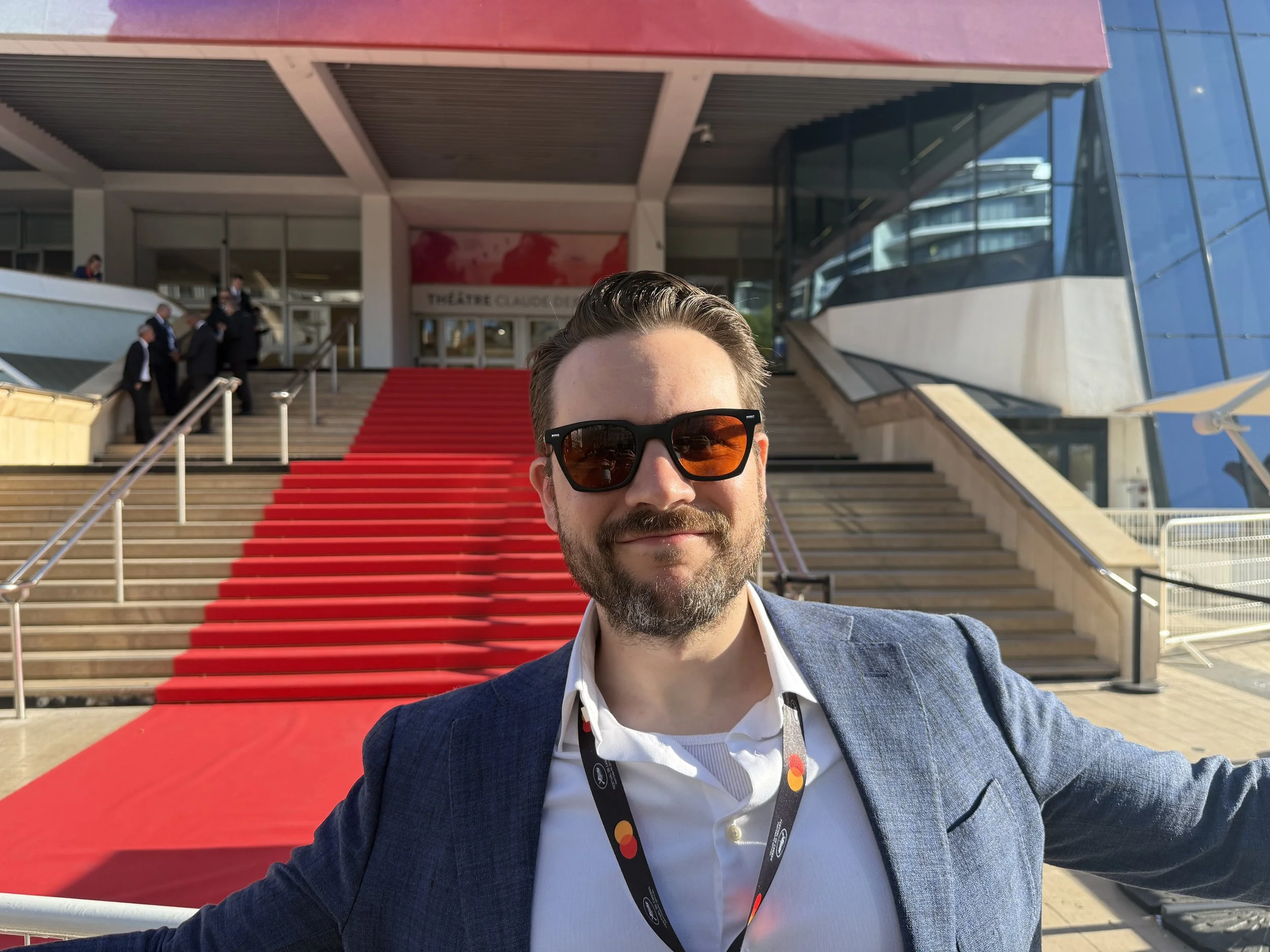
For major premiere screenings at the Grand Théâtre Lumière, there is a strict dress code and it’s black tie. Which means tuxedos, evening gowns, the whole nine. You won’t get in if you’re underdressed.
Outside of that, it’s much more flexible. During the day, people are dressed smart but relaxed. It is a beach after all. At night, and especially if you’re trying to move through higher-end spaces or events, it helps to step it up. Though I’d avoid a tie and find that casual in-between if you can.
I suggest bringing a few strong outfits you can wear in the summer heat, and then picking one or two nights where you can really step it up. Not because you have to, but because Cannes is one of the few places where it actually feels worth it. And you need those fire photo shoots for social media. Because if the internet doesn’t see it… it didn’t happen.
8. Transit & Lodging
The entire expanse of Cannes is extremely walkable. Though I realize this may be subjective, it is important to note that the general footprint is under two miles - not including satellite theaters. If you have the cash, I’d suggest you stay in a hotel along the shore. If you’re open to AirBnB, however, you can find more affordable options further along the coast in either direction (though I wouldn’t change cities unless you plan to go further inland. The train line between the coastal cities can get very crowded and unpleasant, so avoid Monaco as lodging). We found a good spot at an apartment complex that was literally a half hour walk from the main theater. And when the walk was too much for us we could easily find an Uber or grab a bus. Ubers will be plentiful while the festival is afoot and buses run every twenty minutes or so (use Google Maps).
9. Translation Errors
I’ve been learning French for years now (to what feels like no avail) but even in my limited capacity, I never once felt like I was excluded from comprehension. There is plenty of English throughout the entire event. You will not have to ask for assistance as often as you think. Though learning the basics of French is highly encouraged and honestly.. if you’re there to sell a film, fund a film, or at the very least seem like you are a true film snob, then try to learn the basics: Hello, Goodbye, Thank you, Please, I would like, I would not like, I love this movie, I didn’t understand this movie, Is that Tom Cruise, etc. etc.
Last thoughts
This will feel like a high pressure event, but once you get a feel for the area it’s really not that stressful.
I would suggest walking the entire lay of the land on your first day. Find the ends of the festival on all sides. Pinpoint the main hubs and walk as far as the crowd will take you.
We didn’t go as far as we could when we initially got there and we missed a few fun events like the beachside screenings, Cinéma de la Plage, where they’ll play some old films for anyone on the sand (but we did see a little of One Flew Over the Cuckoo’s Nest there).
Treat the festival like a vacation as much as you treat it like a work opportunity. If you are there to sell your film, or fund your film, then you need to be approachable and easy to talk to. The first lesson is to relax. This entire event is held on the sunny seaside of Southern France, so act like it! Sit down and have a beer! Dip your toes in the water! Get a snack whenever you can! Take yourself out to dinner. Don’t get two glasses, get the bottle! Live a little! It’s easier here than most festivals. So when you do have an important meeting or a chance encounter, you won’t be giving off all the wrong vibes.
Don’t forget to eat and drink water. Seriously, it sounds dumb but when you’re going from one two-hour-movie to the next, you will likely forget to hydrate. This is the summer heat. Drink to hydrate, eat to absorb any alcohol.
Keep an eye out for the hotels that face the sea. If you look up at some key balconies you’ll see banners for production companies and distributors. This is them telling you where they are staying and where you can find them beyond the Marché du Film. Sometimes they’re right inside the lobby waiting for you!
Not everything at Cannes is part of the main competition, and that’s important to understand.
There are entire sections of the festival dedicated to films outside of competition, and many of them are just as strong, if not stronger, than the headline premieres. You’ll find films playing under banners like Out of Competition, Special Screenings, Cannes Classics, and other parallel sections, all running throughout the event. Look for these subsections of the festival.
Inside the Palais des Festivals et des Congrès, there are dedicated viewing areas where films are playing continuously throughout the day. One of the best, is the short film viewing space. It’s essentially a library-style room where you can sit down, throw on a pair of headphones, and browse a curated selection of short films on demand. No lines, no reservations, no dress code. Just a quiet place to watch the work without the chaos.
If you limit yourself to only the main competition, you’re missing a huge part of what Cannes actually is.
I hope this was helpful! Remember, if you’re going to Cannes, don’t stress about what you can and can’t do. Just go to celebrate the medium of film and you’ll have a blast.
I can’t make it to Cannes 2026 but I will be back soon and I will return with a film of my own! In fact, I’m manifesting that outcome right here, right now; and I’m telling anyone who is reading this blog that I will soon have a film out and in the competition at Cannes and it will sell right then and there on the spot, and I’m literally only manifesting the best outcomes here because why the hell wouldn’t I, and it will be the talk of the summer and box office numbers around the world will crumble under the weight of its popularity and holy cow is anyone still reading this, I may have gone too far.